When your child is diagnosed with a chest condition, it’s completely normal to feel scared and overwhelmed. You want answers — clear, simple, honest ones. Pediatric thoracic surgery is a specialized field that treats chest-related problems in children, from newborns to teenagers. The good news? Most children who undergo pediatric thoracic surgery go on to live healthy, active lives. This blog walks you through everything you need to know — in plain language, no medical jargon.
What Is Pediatric Thoracic Surgery?
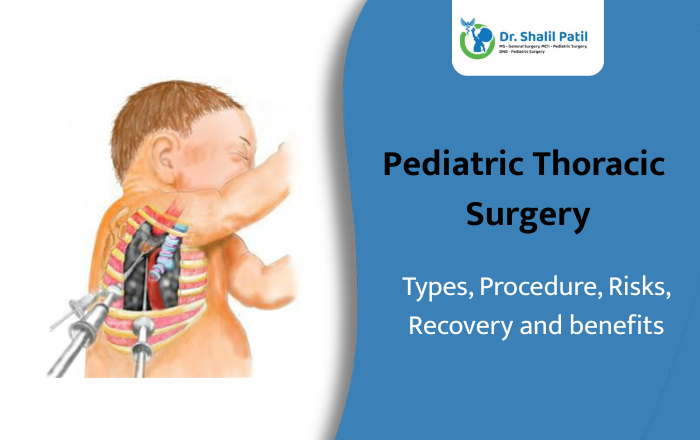
Pediatric thoracic surgery involves operations on the chest area in children — including the lungs, windpipe, food pipe, diaphragm, and chest wall. Children’s bodies are very different from adults, so they need a surgeon specifically trained to operate on young patients.
Common Types of Pediatric Thoracic Surgery
1. Congenital Diaphragmatic Hernia (CDH) Repair
This is a birth defect where abdominal organs move into the chest through an opening in the diaphragm, squeezing the lungs. It is often a neonatal emergency requiring surgery within the first days of life.
2. Tracheoesophageal Fistula (TEF) Repair
Here, the food pipe is either not formed properly or has an abnormal connection to the windpipe. It occurs in about 1 in 3,500 births. Surgery separates these structures so the child can eat and breathe normally.
3. Lung Removal (Lobectomy)
When part of the lung is diseased due to a malformation, abscess, or tumor — surgeons remove only the affected portion. Healthy lung tissue grows and takes over in children remarkably well.
4. Chest Wall Deformity Correction
Pectus Excavatum (sunken chest) and Pectus Carinatum (pigeon chest) are structural problems that can affect breathing and heart function. The Nuss Procedure is a popular surgical fix for sunken chest and works especially well in children.
Pectus Excavatum affects 1 in 300–400 children and is 3–5 times more common in boys.
5. Empyema Drainage
When bacterial pneumonia leads to pus collecting around the lungs, surgery is needed to clean and drain the chest. Most children recover fully within 4–6 weeks.
6. CPAM (Congenital Pulmonary Airway Malformation) Surgery
CPAM is abnormal cyst-like lung tissue present from birth. Even if your child has no symptoms, surgery is usually recommended to prevent future infections and rule out serious complications.
How Is the Surgery Performed?
Before Surgery
Your child will have a CT scan, chest X-ray, blood tests, and a full fitness check. The surgical team creates a plan tailored to your child’s exact condition.
During Surgery
Your child is under general anesthesia — fully asleep and feeling nothing. There are two main approaches:
- Open Surgery (Thoracotomy): A larger incision on the side of the chest. Used for complex cases. Gives the surgeon full access.
- Keyhole Surgery (VATS): 3–5 tiny cuts, a small camera, and instruments are used. Less scarring, shorter hospital stay, and faster recovery.
| Feature | Open Surgery | Keyhole (VATS) |
|---|---|---|
| Hospital Stay | 5–10 days | 2–5 days |
| Scarring | More visible | Minimal |
| Recovery | 4–6 weeks | 2–3 weeks |
After Surgery
Your child goes to the Pediatric ICU for monitoring. A small drain tube may stay in the chest for 1–3 days. Pain is managed safely, and feeding begins gradually.
What Are the Risks?
Every surgery carries some risk. Being informed helps you watch for warning signs early.
Common short-term risks:
- Bleeding or infection
- Temporary air leak from the lung
- Breathing difficulty in the first few days
Less common risks:
- Injury to nearby blood vessels or nerves
- Fluid buildup (chylothorax)
- Recurrence of the condition
How risks are kept low: An experienced pediatric thoracic surgeon working in a well-equipped hospital with a good PICU significantly lowers all these risks. Pre-surgical planning and careful post-operative monitoring are key.
Recovery — What to Expect at Home
- Week 1–2: Rest at home. No running or jumping. Wound must be kept clean and dry.
- Week 3–4: Most children return to school.
- Week 4–6: Gradual return to physical activity based on surgeon’s clearance.
- Diet: Protein-rich meals help the body heal faster.
- Follow-ups: Don’t skip these. Your surgeon needs to check healing and do any required imaging.
Children heal much faster than adults. Their bodies adapt, grow, and bounce back in ways that are truly remarkable.
Benefits of Pediatric Thoracic Surgery
- Saves lives — conditions like CDH or TEF are fatal without surgery
- Stops recurring infections — removing malformed tissue eliminates ongoing risk
- Restores normal breathing — children breathe and grow properly after surgery
- Improves everyday life — children can eat, play, and thrive
- Better outcomes when done early — the younger the child, the better the body adapts
Studies show over 90% of children with congenital lung conditions achieve excellent long-term lung function after surgery at specialized centers.
FAQ
Q. Is chest surgery safe for newborns?
Yes, when performed by a trained pediatric surgeon at a hospital with neonatal support.
Q. Will my child be in pain?
Pain is managed well with safe medications. They feel nothing during surgery.
Q. How soon can my child return to normal life?
Most children are back to school in 3–4 weeks and full activity in 6–8 weeks.
Q. Can we avoid surgery and just monitor?
In some mild cases, yes. Your surgeon will advise based on the specific condition and risks of waiting.
Consult Dr. Shalil Patil — Pediatric Surgeon in Virar, Mumbai
If your child needs a pediatric thoracic surgery evaluation, choosing the right surgeon is the most important decision you’ll make.
We recommend Dr. Shalil Patil, a trusted Pediatric Surgeon with 9+ years of experience, practicing at Sahayog Hospital, Virar, Mumbai. Dr. Patil has helped hundreds of young patients and their families navigate pediatric surgical conditions with skill and genuine care.
Don’t wait — book a consultation today. Early evaluation means better outcomes for your child. Take that first step now.